 Pool ownership has a well-known pattern: the owners who consistently spend a little time and money on regular upkeep tend to spend far less overall than those who wait until something visibly goes wrong. It’s a counterintuitive idea at first ,spending more often to spend less overall ,but it holds up consistently once you look at how pool problems actually develop. Building a relationship with a reliable source of Canada pool supplies and treating maintenance as an ongoing habit rather than an occasional emergency response is one of the most effective ways pool owners protect both their equipment and their wallet.
Small Chemical Imbalances Lead to Bigger, Costlier Problems
Water chemistry that drifts out of balance doesn’t just affect swimmer comfort ,it actively damages equipment and surfaces over time. Water that’s too acidic can corrode metal components, damage liners, and degrade seals throughout a pool’s plumbing and equipment. Water that’s too alkaline can cause scaling that clogs filters, reduces heater efficiency, and creates cloudy, uninviting water that requires more aggressive treatment to correct.
Regular testing and small, timely adjustments prevent these imbalances from ever reaching a point where they cause real equipment damage. The cost of routine testing supplies and periodic chemical adjustments is minimal compared to replacing a corroded heater component or a damaged liner caused by water chemistry that was left unchecked for too long.
Equipment Lasts Significantly Longer With Regular Care
Pumps, filters, heaters, and automation systems are all built to operate within certain conditions, and consistent maintenance keeps them operating within those parameters rather than being pushed beyond them. A filter that’s cleaned regularly maintains proper water flow and doesn’t strain the pump working to push water through it. A heater operating in properly balanced water avoids the scaling and corrosion that shorten its effective lifespan.
Equipment that receives consistent care routinely lasts years longer than equipment that’s neglected between periods of heavy, reactive maintenance. Since pool equipment represents a significant financial investment, extending its functional lifespan through regular care produces meaningful savings simply by delaying the need for replacement.
Robotic Cleaners Make Consistency Easier to Maintain
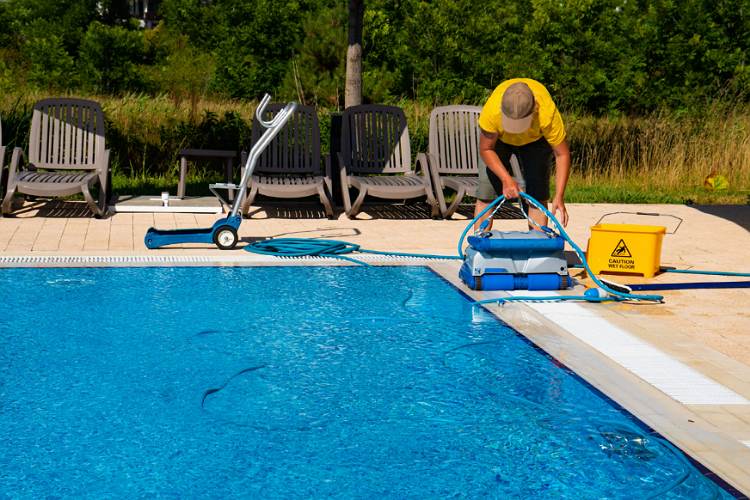
One of the more significant developments in pool maintenance has been the rise of reliable robotic pool cleaners that handle routine debris removal automatically, without requiring the owner to manually vacuum or brush the pool on a consistent schedule. This automation removes one of the biggest obstacles to consistent maintenance: the tendency for manual tasks to get skipped or delayed when life gets busy.
A pool that’s cleaned consistently, rather than sporadically, tends to require less aggressive chemical treatment overall, since debris and organic material don’t have the chance to build up and interact with pool chemistry in ways that create additional problems requiring correction.
Smart Automation Prevents Costly Oversights
Automated pool control systems, which allow owners to monitor and adjust equipment settings remotely, help prevent a specific category of costly mistake: equipment left running unnecessarily, or conditions that go unnoticed until they’ve already caused a problem. A heater accidentally left running, a pump cycle that wasn’t properly scheduled, or a chemical system that isn’t functioning correctly can all go unnoticed for extended periods without some form of monitoring in place.
Smart automation systems give owners visibility and control that manual systems don’t provide, catching potential issues earlier and reducing the operational costs associated with equipment running inefficiently or unnecessarily.
Salt Chlorination Reduces Certain Long-Term Maintenance Costs
Salt chlorination systems have grown in popularity partly because of their potential to reduce certain ongoing maintenance costs compared to traditional chlorine systems, since they generate chlorine on an ongoing basis rather than requiring regular manual addition of chlorine products. While salt systems come with their own maintenance considerations and upfront costs, many pool owners find that the more consistent, automatically generated chlorine levels reduce the swings in water chemistry that often lead to more significant maintenance issues.
Preventive Maintenance Avoids the Premium Cost of Emergency Service
Reactive pool repairs often come with cost premiums that planned, preventive maintenance simply doesn’t carry. Emergency service calls, rush parts ordering, and the urgency of fixing a pool that’s completely out of commission all tend to cost more than the same repair would if it had been addressed proactively as part of routine maintenance. Preventive maintenance essentially trades a series of smaller, predictable costs for the avoidance of these larger, unpredictable, and often more expensive reactive repairs.
Building a Maintenance Routine Pays for Itself
Owners who establish a consistent maintenance routine ,regular testing, scheduled equipment checks, timely replacement of wear components like filters ,tend to spend considerably less over the life of their pool than owners who only address issues once they become impossible to ignore. This routine doesn’t need to be complicated; even basic, consistent attention to the fundamentals produces significant savings compared to a purely reactive approach.
The Bottom Line
Pool maintenance costs money either way ,the real choice is between smaller, predictable, preventive expenses or larger, unpredictable, reactive ones. Regular chemical balance, automated tools like robotic cleaners and smart control systems, and attentive equipment care all work together to extend equipment life and avoid the kind of costly emergencies that develop when maintenance is deferred. For pool owners looking to genuinely save money over time, consistent preventive care remains one of the most effective strategies available.