 Crane operations play a critical role across industries such as construction, logistics, and infrastructure. However, if you’re not directly involved in the field, some of the terminology can feel overwhelming. Whether you’re coordinating a project or hiring a crane through a professional provider like Sventek Cranes, understanding the key terms used in crane operation helps improve communication, efficiency, and safety on-site.
Below, we break down common crane-related terminology in clear and practical terms.
Load Capacity
This refers to the maximum weight a crane can safely lift. Load capacity depends on the type of crane, the boom length, and the radius of the lift. Exceeding this limit can compromise safety, so load charts are used to guide operators and site managers.
Boom
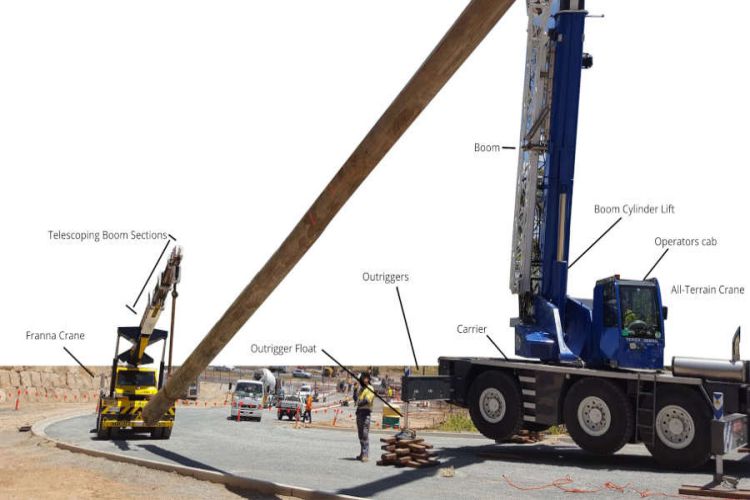
The long, fixed or telescopic arm that protrudes from the crane to lift and move objects is called the boom. It determines how high and how far a crane can reach. Booms can be straight, angled, or lattice in design depending on the crane type.
Jib
A jib is an add-on that is fastened to the end of the boom to increase the crane’s reach. It’s particularly useful when a project requires lifting materials into tight or hard-to-reach areas, such as behind a tall building or over obstacles.
Counterweight
Heavy blocks called counterweights are mounted on a crane’s back to balance the weight being raised. When lifting heavy materials, they keep the crane from toppling forward and are precisely calculated for every lift.
Outriggers
Outriggers are extendable supports that stabilize mobile cranes during operation. They are deployed horizontally and vertically to provide a larger base of support, ensuring the crane remains steady when lifting.
Hook Block
The hook block is the system of pulleys, sheaves, and the lifting hook used to attach loads. Depending on the crane and load requirements, hook blocks can be designed for single-line or multiple-line lifting.
Radius of Lift
This describes the distance from the center of the crane’s rotation to the load. The further the radius, the less weight the crane can safely lift. This is why crane positioning is so important on worksites.
Slewing
Slewing is the motion of the crane as it rotates on its axis. This function allows cranes to move loads horizontally across different sections of a worksite without needing to reposition the entire machine.
Rigging
Rigging refers to the equipment and process used to secure loads to the crane hook. This includes slings, shackles, and spreader bars. Proper rigging is essential to ensure stability and safety during lifts.
Lift Plan
A lift plan is a detailed outline prepared before a major crane operation. It includes information such as load weights, lifting points, crane positioning, rigging methods, and site conditions. It serves as both a safety and efficiency guide.
Why Knowing the Terminology Matters
Clear communication is vital for safe and efficient crane operations. By understanding these terms, project managers, contractors, and even clients can collaborate more effectively with crane operators. It also helps in avoiding misunderstandings that could lead to delays or safety risks.
Final Thoughts
Crane operation involves precise calculations and teamwork, supported by a specialized vocabulary that ensures everyone on site is on the same page. The next time you’re managing or observing a crane project, you’ll have a much clearer grasp of what’s happening and why.