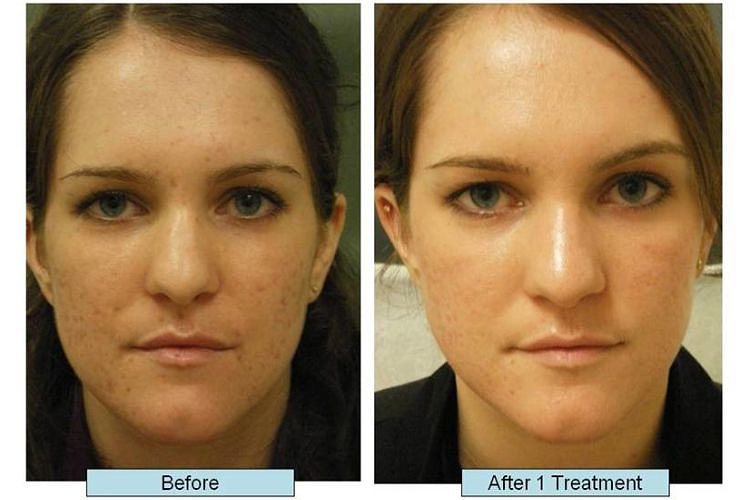
 Do acne scars make you avoid mirrors or bright lighting? An acne scar treatment SG is formed when inflammatory acne damages collagen in the dermis, creating permanent textural changes that differ from temporary post-inflammatory hyperpigmentation. Acne scar treatment combines multiple technologies to address different scar types simultaneously, with fractional lasers and radiofrequency devices promoting collagen remodeling.
Ice pick scars, boxcar scars, and rolling scars each have distinct characteristics and respond differently to treatment modalities. Ice pick scars often require TCA CROSS application, while rolling scars respond well to subcision procedures that physically release tethered fibers.
Types of Acne Scars and Their Characteristics
Ice Pick Scars
Ice pick scars appear as narrow, deep pits measuring less than 2mm in diameter but extending into the dermis. These V-shaped depressions result from cystic acne destroying tissue in a columnar pattern. The steep edges and narrow opening make these scars resistant to surface treatments, requiring focused interventions that reach the base of the scar.
TCA CROSS (Chemical Reconstruction of Skin Scars) applies trichloroacetic acid at 70-100% concentration directly to the scar base using a toothpick or fine applicator. The controlled chemical injury stimulates collagen production from the bottom up, with visible improvement after 3-6 sessions spaced 4-6 weeks apart.
Boxcar Scars
Boxcar scars create round or oval depressions with sharp vertical edges, typically measuring 1.5-4mm in diameter. These scars form when inflammatory acne destroys collagen support, causing the overlying skin to collapse. The depth varies from 0.1-0.5mm, with shallower scars responding to resurfacing treatments.
Fractional CO2 lasers vaporize columns of tissue at 50-150 micron widths, reaching depths of 0.5-2mm depending on settings. Each pulse creates a microthermal zone surrounded by intact tissue, allowing rapid healing within 5-7 days while stimulating neocollagenesis over 3-6 months.
Rolling Scars
Rolling scars produce wave-like depressions 4-5mm wide caused by fibrous bands tethering the epidermis to deeper structures. These scars create shadows that change with facial expressions and lighting angles. The tethering occurs when inflammation triggers abnormal healing patterns that pull the surface skin downward.
Subcision uses an 18-gauge needle or specialized cannula inserted parallel to the skin surface to physically sever these fibrous attachments. The procedure creates a controlled wound healing response that elevates the depressed area through new collagen formation. Combining subcision with dermal fillers prevents re-adhesion while providing immediate volume correction.
Modern Treatment Technologies
Fractional Laser Resurfacing
Fractional lasers divide the treatment beam into thousands of microscopic zones, treating 15-40% of the skin surface per session. CO2 lasers operating at 10,600nm wavelength create deeper ablation zones reaching 2mm, while erbium YAG lasers at 2,940nm provide more superficial resurfacing at 0.5-1mm depths.
Non-ablative fractional lasers like the 1,927nm thulium fiber laser heat tissue without vaporization, creating coagulation zones that stimulate remodeling with minimal downtime. Treatment parameters adjust based on scar depth – deeper scars require higher fluences (25-70 mJ per microbeam) and increased density coverage (300-1,200 MTZ/cm²).
Recovery varies by laser type and settings. Ablative treatments cause 5-7 days of crusting and peeling, while non-ablative options produce 2-3 days of mild swelling and redness. Complete collagen remodeling continues for 3-6 months post-treatment, with results typically visible after 3-5 sessions.
Radiofrequency Microneedling
RF microneedling combines mechanical injury from 0.5-3.5mm needles with radiofrequency energy delivered directly into the dermis. The insulated needles protect the epidermis while heating deeper tissue to 60-65°C for 2-4 seconds, creating precise thermal coagulation zones.
The dual mechanism addresses both textural irregularities and skin laxity. Needle penetration breaks up scar tissue while RF energy tightens existing collagen and stimulates new production. Treatment depths adjust based on scar characteristics – superficial scars at 0.5-1mm, moderate scars at 1.5-2.5mm, and deep scars at 2.5-3.5mm.
Protocols typically recommend 3-4 sessions spaced 4-6 weeks apart. Each treatment takes 20-30 minutes with topical anesthetic applied 45 minutes prior. Post-procedure erythema resolves within 24-48 hours, with minimal risk of post-inflammatory hyperpigmentation compared to laser treatments.
Picosecond Lasers
Picosecond lasers deliver energy in trillionths of a second, creating photoacoustic effects that shatter pigment and stimulate remodeling without significant heat accumulation. The 755nm alexandrite and 1,064nm Nd:YAG wavelengths target both pigmentation and textural concerns.
Focus lens arrays concentrate energy into micro-injury zones 100-200 microns in diameter, creating laser-induced breakdown (LIOB) in the dermis. These cavitation bubbles disrupt scar tissue while preserving the epidermis, making the treatment suitable for darker skin types IV-VI on the Fitzpatrick scale.
Treatment protocols typically involve 6-10 sessions at 4-week intervals. Each pulse delivers 0.3-0.8 joules at spot sizes of 6-8mm, with 10-20% overlap between passes. Immediate erythema and mild edema resolve within 2-4 hours, allowing same-day return to activities.
Combination Approaches
Sequential treatment planning addresses different scar components systematically. Initial subcision releases tethered scars, followed by fractional laser resurfacing 4-6 weeks later to smooth surface texture. RF microneedling sessions alternate with laser treatments to stimulate collagen through varied mechanisms.
Chemical peels using TCA or modified Jessner’s solution complement energy-based devices by addressing superficial texture and pigmentation between sessions. The controlled desquamation removes damaged surface cells while allowing deeper treatments to work more effectively.
Injectable treatments may be considered for specific scar types. Hyaluronic acid fillers can provide volume for deep boxcar or rolling scars. Poly-L-lactic acid may stimulate gradual collagen production over time. The appropriate treatment approach, including dosages and frequency, should be determined by a qualified healthcare professional.
Platelet-rich plasma contains growth factors at elevated concentrations and may accelerate healing when applied post-procedure. The preparation process and application method should be determined by a healthcare professional.
Treatment Planning and Expectations
Initial consultation involves dermoscopy examination to classify scar types and depths. Wood’s lamp examination differentiates post-inflammatory changes from true scarring. Photography under standardized lighting documents baseline texture for treatment monitoring.
Mild scarring typically responds to single-modality treatment over several sessions. Moderate scarring with mixed types requires combination approaches. Severe scarring with extensive involvement needs multi-modal protocols.
Pre-treatment preparation may include tretinoin for several weeks to normalize keratinization and enhance treatment penetration. Hydroquinone may address concurrent pigmentation concerns. Oral isotretinoin should be discontinued well before ablative laser treatments due to impaired wound healing. A healthcare professional should determine appropriate medications and timing.
Post-treatment care varies by modality. Ablative procedures require occlusive dressings followed by gentle cleansing and moisturizer application. Sun protection prevents post-inflammatory hyperpigmentation during the healing phase. Silicone gel sheets may optimize scar remodeling. Specific care instructions should be provided by your healthcare professional.
What Our Aesthetic Doctor Says
Individual scar assessment reveals unique characteristics that standard classifications miss. A single acne scar might have ice pick morphology at its center with rolling edges, requiring targeted TCA CROSS followed by broader RF microneedling coverage. Patient skin type influences energy settings significantly – Fitzpatrick IV-VI skin requires longer wavelengths and conservative fluences to minimize pigmentation risks.
The sequence of treatments matters as much as the modalities chosen. Starting with subcision for tethered scars creates a foundation for subsequent laser work. Energy-based devices work synergistically when spaced appropriately – fractional laser creates channels for enhanced RF penetration when performed 2-3 weeks prior.
Realistic timeline discussions prevent disappointment. Initial improvement appears at 4-6 weeks as inflammation resolves, but true collagen remodeling peaks at 3-6 months post-treatment. Some patients notice continued improvement up to 12 months after completing their treatment series.
Putting This Into Practice
- Schedule treatments during periods of minimal sun exposure to reduce pigmentation risk and allow consistent healing between sessions
- Document your scarring with consistent lighting and angles monthly to track subtle improvements that develop gradually
- The appropriate use of tretinoin should be determined by a healthcare professional, who can advise on concentration and application for maintaining skin cell turnover between sessions
- Use mineral sunscreen with zinc oxide or titanium dioxide during the treatment period as chemical sunscreens may irritate healing skin
- Plan your treatment schedule around social commitments, allowing adequate recovery time as advised by your healthcare provider
When to Seek Professional Help
- Active cystic acne requiring medical management before scar treatment
- Keloid scarring or hypertrophic scar formation
- Scarring accompanied by persistent redness lasting over 6 months
- Deep atrophic scars affecting facial contours
- Post-inflammatory hyperpigmentation not responding to topical treatments after 3 months
- Scarring causing psychological distress or social anxiety
Commonly Asked Questions
How soon after active acne clears can I start scar treatment?
Consult a healthcare professional about timing for scar treatments after your last inflammatory lesion. This allows natural healing to occur and prevents treating areas that might improve spontaneously. Gentle treatments like chemical peels or non-ablative lasers may be considered earlier if no active inflammation exists.
Will my acne scars return after treatment?
Treated acne scars typically don’t return, but new scarring can develop if acne recurs. The remodeled collagen from treatment remains permanent, though natural aging affects skin texture over time. Maintenance treatments may be recommended to help sustain results.
Can I treat acne scars if I have darker skin?
Darker skin types require modified protocols using longer wavelengths, lower fluences, and longer pulse durations. Picosecond lasers and RF microneedling offer alternatives to traditional CO2 resurfacing. Pre-treatment with hydroquinone may be recommended to reduce pigmentation risk.
How do I choose between different laser types for my scars?
Scar depth helps determine optimal laser selection. Superficial scars may respond to non-ablative fractional lasers or picosecond treatments. Moderate scars may benefit from ablative fractional resurfacing. Deep scars may require combination approaches including subcision and specific laser parameters. A healthcare professional can help determine appropriate treatment options.
What’s the difference between acne marks and acne scars?
Acne marks (post-inflammatory erythema or hyperpigmentation) are flat color changes that may fade over time. True acne scars involve textural changes – depressions, raised areas, or uneven surface texture that persist without treatment. Dermoscopy examination can help differentiate between these conditions.
Next Steps
Successful acne scar treatment requires individualized protocols that match specific scar types with appropriate technologies. Fractional lasers target surface texture, RF microneedling stimulates deep collagen remodeling, and targeted approaches like TCA CROSS address ice pick scars. Sequential treatments over 3-6 months produce optimal outcomes through coordinated collagen remodeling.
If you’re experiencing ice pick scars, boxcar depressions, or rolling skin texture from past acne, MOH-accredited aesthetic doctors can evaluate your specific scarring patterns and recommend targeted treatment protocols.