 If you’re new to Pilates, it’s completely normal to feel a little overwhelmed by the terminology instructors use during class. Words like neutral spine, the powerhouse, or articulation can sound technical at first, but once you understand what they mean, everything starts to click into place.
Whether you’re attending your first mat class, stepping onto a reformer for the first time, or browsing equipment and resources from Pilates Direct, this beginner-friendly guide will walk you through the most common Pilates terms you’ll hear — in plain, practical language.
The Powerhouse
Often referred to as the centre of the body, the powerhouse includes your abdominals, lower back, hips, and glutes. In Pilates, almost every movement begins from this area. When instructors say “engage your powerhouse,” they’re encouraging you to stabilise your core to support controlled, efficient movement.
Neutral Spine
Your neutral spine is the natural alignment of your spine, maintaining its gentle curves rather than flattening or arching excessively. Many Pilates exercises are performed in neutral spine to promote good posture, reduce strain, and improve spinal awareness.
Imprint
The opposite of neutral spine, imprint refers to gently pressing the lower back into the mat by engaging the abdominals and slightly tilting the pelvis. This position is often used in beginner exercises to support the lower back and improve core control.
Breath (Lateral Breathing)
Pilates breathing is unique. Known as lateral breathing, it encourages you to breathe deeply into the ribcage while keeping the abdominals engaged. You’ll often hear cues like “inhale to prepare, exhale to move,” helping you coordinate breath with movement for better control and focus.
Control
Control is a fundamental Pilates principle. Rather than rushing through movements, Pilates emphasises slow, deliberate motion. This reduces momentum, improves muscle engagement, and lowers the risk of injury.
Alignment
When instructors talk about alignment, they’re referring to how your body is positioned — head over shoulders, shoulders over hips, hips level, and limbs tracking correctly. Proper alignment ensures exercises are effective and safe.
Articulation
Articulation describes the controlled movement of the spine, vertebra by vertebra. Exercises like roll-downs and bridges focus on spinal articulation, improving flexibility and mobility while strengthening the supporting muscles.
Flow
Pilates exercises are designed to move seamlessly from one to the next. This sense of flow helps maintain rhythm, concentration, and continuous muscle engagement throughout the session.
Range of Motion
Your range of motion refers to how far a joint can move comfortably. Pilates encourages safe, controlled movement within your personal range, gradually improving flexibility without forcing or straining.
Reformer
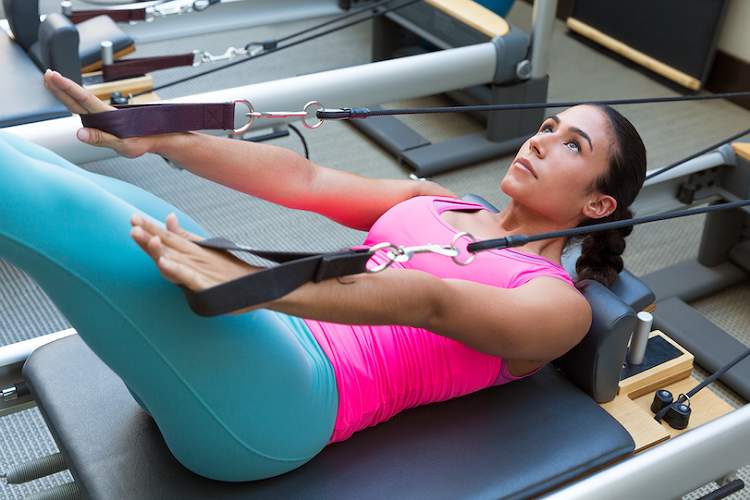
The reformer is one of the most well-known Pilates machines. It uses springs, straps, and a moving carriage to provide resistance and support. While it may look intimidating, it’s highly adaptable for beginners and advanced practitioners alike.
Springs
On Pilates equipment, springs control resistance. Lighter springs assist movement, while heavier springs increase challenge. Changing spring settings allows exercises to be modified for strength, support, or rehabilitation.
Cueing
Cueing refers to the verbal instructions given by instructors to guide your movement, breathing, and posture. Pilates cueing is often precise and detailed, helping you become more aware of how your body moves.
Mind–Body Connection
One of Pilates’ defining features is its focus on the mind–body connection. You’re encouraged to stay mentally engaged, concentrating on muscle activation, alignment, and breath rather than moving on autopilot.
Learning Pilates terminology may seem daunting at first, but it quickly becomes second nature
Understanding these common terms will help you feel more confident in class, improve your technique, and get more out of every session. As with any new practice, patience is key. Over time, these words won’t just make sense — they’ll become part of how you move, breathe, and strengthen your body through Pilates.